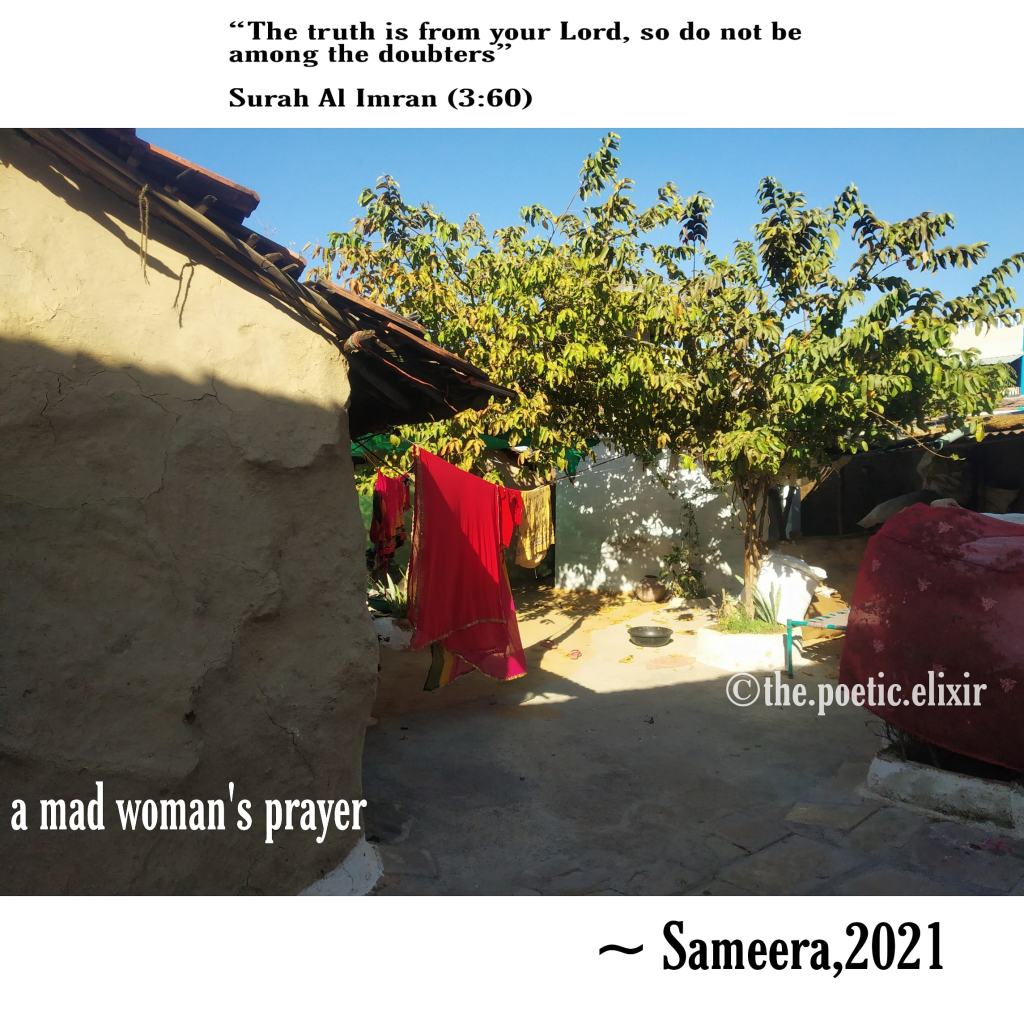
“The truth is from your Lord, so do not be among the doubters”
-Surah Al Imran (3:60)
The floor under my musalla is broken,
I speak to you with a broken alif,
my tongue is tied,
I have been numb for so long
that I have forgotten if the soul you put in me
exists or not.
I come to you in complete agreement
I place my faith in your heart
speak to me as I pray tonight.
The dream catcher will not be kind,
let nightmares find their way to my home
you are my savior tonight
and for all the nights that will pass through this window.
I have seen this woman crying
begging for her son on the steps of the blue mosque,
whose chamber no longer echoes with the azaan,
whose doors are locked by the oppressors.
Tell me you will come to us,
in ways we will never know,
tell me you are here
as I break my prayers into tears,
tell me
when my head bows in sujood.
Tell me,
as oceans rise in your name
and volcanoes erupt across the land.
I am broken. My words are prisoned in the poem that no longer walks.
Yet I come to you with a moon in dupatta,
and blazing sun under my veil,
assure me that I carry the universe.
Speak to me as I pray tonight.
Your verses of golden calligraphy
on the burnt pages of the time
are turning stones into feathers.
Tell me there’s a junction between the two seas
and I will meet you there.
Until then let caves of my heart remain open
to love
and compassion.
to mercy
and forgiveness.
to the truth
and faith.
The floor under my musalla is broken,
I come to you with my tongue tied.
They call me mad,
and throw stones
as I walk past your home,
praying for my son.
The bird in my heart cries.
Tell me
that the world is deaf
but you hear my sighs tonight.
© Sameera Mansuri. 2021
All rights reserved for the picture and the poetry.
Prompt used – a mad woman’s prayer by Devika Mathur.
Inspired by Tonight by Agha Shahid Ali.
- musalla – a prayer mat
- sujood – prostration (as in prayers offered by muslims)
- azaan – the call for a prayer from the mosque
- alif – the first alphabet in both Arabic and Urdu language.
 The Poetic Elixir
Faithful poem. Blessings ❤️
LikeLiked by 1 person
Thank you so much ✨
LikeLiked by 1 person